Flower Sun: A Joyful Embroidery Design for Personalized Gifts
First Impressions: Warmth, Whimsy, and Instant Uplift
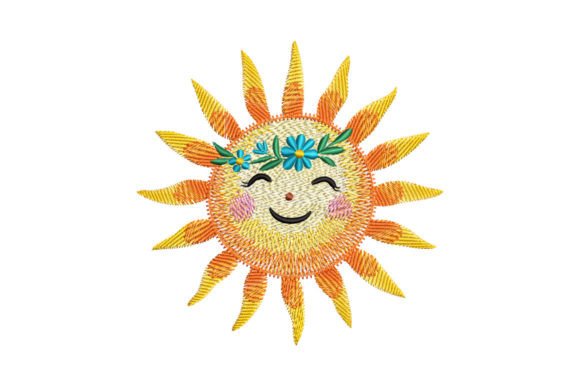
As an embroidery designer who’s tested hundreds of digital embroidery files for retail and custom work, Flower Sun landed with a quiet but unmistakable spark. It’s not just another summer-themed motif—it’s emotionally intelligent design. The smiling sun feels genuinely kind, not cartoonish; its rays flow with gentle rhythm, not rigid symmetry. And that floral wreath? Bright without being loud, detailed without being fussy. It reads as handmade at a glance—soft curves, balanced spacing, and a warmth that translates even in grayscale mockups. For personalized gift products, that emotional resonance is non-negotiable. Customers don’t buy suns—they buy optimism, new beginnings, calm mornings, or shared laughter. Flower Sun delivers that quietly, consistently.
Where This Design Truly Shines
Flower Sun is unusually versatile across high-intent gifting categories—especially where sentiment meets practicality.
- Baby embroidery: Perfect for crib blankets, onesie accents (on stable knit blends), and nursery wall hangings. Its round shape frames tiny hands beautifully, and the floral-sun combo subtly nods to growth, light, and tenderness—ideal for birth announcements or baby showers.
- Wedding gift: Stitch it onto linen pillow covers for the couple’s first home, or onto cotton napkins for a joyful rehearsal dinner. It avoids cliché while feeling celebratory—more “sunrise on the big day” than “just married.”
- Personalized towel & kitchen goods: As an embroidered towel centerpiece or apron chest accent, Flower Sun adds charm without overwhelming utility. Its moderate scale holds up well on terry cloth when stabilized correctly.
- Nursery decor & keepsakes: Think framed hoop art, quilt blocks, or custom storybook covers. The design’s balance makes it photograph beautifully—critical for Etsy sellers and small shop product listings.
- Tote bags & pillow covers: On medium-weight canvas or linen, the floral wreath reads clearly at 4–5 inches wide. It invites personalization—add a name or date discreetly beneath the sun for heirloom-level meaning.
Use With Intention: Where to Proceed Thoughtfully
Even joyful designs have boundaries—and respecting them protects your reputation as a maker who values quality over speed.
Avoid placing Flower Sun on very stretchy baby knits (like 95% cotton/5% spandex onesies) without extensive testing. The floral details may distort during wear or washing. Likewise, dense terry towels demand heavier cutaway stabilizer and slower stitch speeds—don’t assume standard settings will suffice. Curved surfaces (mugs, curved pillow fronts) require repositioning or digitizing adjustments; the design wasn’t built for wrap-around application.
On dark fabric, confirm thread color contrast early. Some floral elements rely on subtle tonal shifts—if your chosen threads blend into navy or charcoal, the wreath loses definition. And if you’re planning small-lettering add-ons (e.g., “Est. 2024”), place text outside the sun’s outermost ray—crowding the perimeter risks visual clutter and stitching tension issues.
How Flower Sun Elevates Your Handmade Product
This isn’t just about prettiness—it’s about perceived value and trust. When customers see Flower Sun on your Etsy listing or boutique shelf, they subconsciously register: careful curation, emotional intelligence, craftsmanship. That impression boosts willingness to pay, encourages repeat orders, and fuels word-of-mouth. In photography, its circular composition naturally draws the eye—no heavy styling needed. Pair it with natural light and linen textures, and you’ve got scroll-stopping content for Instagram or Pinterest.
For small business owners, that translates directly to stronger margins and quieter customer service. Fewer “Why does it look blurry?” messages. More “This made me cry—my daughter loves sunrises.” That emotional connection is what turns a one-time buyer into a lifelong advocate.
Practical Embroidery Notes You Can’t Skip
Before stitching your first customer-ready piece, run these checks:
- Test on scrap fabric that matches your final product—same weight, weave, and stretch. Don’t skip this step, even if you’ve used similar designs before.
- Confirm hoop size compatibility. While not specified here, verify your machine’s minimum hoop requirement against the design’s widest dimension—some floral wreaths exceed 5" even when scaled down.
- Review stitch density. High-density fills in the sun’s face or flower centers can cause puckering on lightweight cotton. If your test shows stiffness, consider reducing density slightly—or switching to a lighter-weight thread.
- Match stabilizer to fabric texture. Lightweight tear-away works for quilting cotton; cutaway is essential for knits and terry. Skipping stabilizer isn’t an option—it’s the foundation of clean Flower Sun execution.
- Compare light and dark fabric mockups. Use printable mockups or physical swatches to preview how thread colors behave—not just on white, but on oatmeal, sage, or navy.
- Inspect small details post-stitch. Check petal tips and ray ends under good light. Loose threads or skipped stitches are easiest to catch before trimming.
- Verify commercial licensing. If you’re selling finished products (not just the embroidery file), ensure your license permits commercial embroidery use. When in doubt, contact the designer or platform directly—never assume.
Final Thought: A Design That Grows With You
Flower Sun isn’t seasonal window dressing. Yes, it fits beautifully in Summer collections—but its emotional core makes it timeless. I’ve already sketched ideas for autumn versions (warm amber rays, dried florals) and winter adaptations (frosted petals, soft glow effects). That flexibility matters. As an Etsy seller or small shop owner, you need designs that support year-round storytelling—not just June bursts.
Whether you’re stitching a baby blanket for a first-time parent, a wedding pillow cover for a longtime client, or a custom tote for a local farmer’s market vendor, Flower Sun carries warmth without weight. It asks little of the maker but gives much to the receiver. And in handmade product creation—that’s the rarest kind of ROI.