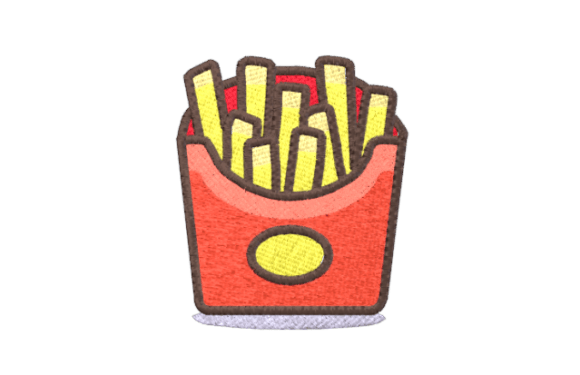
French Fries Embroidery Design
First Impression: Playful, Approachable, and Instantly Recognizable
As an embroidery designer who’s curated over 200 craft fair booths—and watched thousands of shoppers pause, smile, and reach for a product—the French Fries design lands exactly where it should: friendly, foodie-forward, and full of charm. It doesn’t try to be gourmet or minimalist—it leans into lighthearted nostalgia with warmth and wit. That’s gold at a handmade market. Customers don’t need to “get” it—they feel it immediately. No decoding required. Whether displayed on a linen tea towel or stitched boldly across a canvas tote, French Fries reads as cheerful, handmade, and conversation-ready—not kitschy or overly literal.
Where French Fries Shines in Real Craft Fair Displays
In my booth setup, I always lead with three categories: utility (totes, aprons), gifting (pillow covers, pouches), and impulse (patches, caps, small embroidered accessories). French Fries excels across all three—but especially where personality meets practicality:
- Tote bag design: A medium-scale French Fries motif centered on the front of a natural canvas or oatmeal linen tote creates instant visual rhythm—casual enough for farmers’ markets, polished enough for boutique pop-ups.
- Apron embroidery: Positioned just above the pocket or subtly along the waistband, it adds humor without overwhelming the garment’s function. Perfect for bakeries, coffee shops, or food-themed gift baskets.
- Tea towel embroidery: This is where French Fries becomes a quiet hero. On a heavyweight cotton or waffle-weave towel, the design feels tactile, intentional, and giftable—especially when paired with coordinating kitchen items.
- Embroidered patch: Highly portable, scalable, and ideal for Etsy sellers. A 2.5"–3" French Fries patch sells well for denim jackets, lunchboxes, or kids’ backpacks—low risk, high charm.
- Pillow cover & fabric pouch: Works beautifully as a focal point on 12"–16" square pillows or drawstring pouches. The shape lends itself to clean framing, and the subject matter invites repeat purchases (“I’ll take one for my niece *and* my sister”).
What Makes French Fries Sell—Beyond Cuteness
It’s not just about being “fun.” French Fries succeeds because it balances three key selling traits: clarity at a glance, versatility across fabric types, and strong online-to-in-person translation. At a crowded craft fair, shoppers scan in under two seconds—French Fries delivers instant recognition and emotional resonance. Online, it photographs cleanly: no fine gradients or micro-details that blur in natural light or phone camera shots. As a digital embroidery file, it’s likely built for adaptability—making it a smart pick for small shop owners batching multiple handmade product variations.
Production Notes Every Embroidery Designer Should Check
Before cutting thread or loading your hoop, run these real-world checks:
- Test on scrap fabric first—especially if using textured towels or thick canvas. High stitch density can flatten pile or cause puckering.
- Verify thread contrast on both light and dark fabrics. Golden yellow thread pops on navy denim but may vanish on mustard linen—swap to cream or olive for balance.
- Review spacing and outline integrity. If French Fries includes crisp fry ends or subtle salt sprinkles, confirm those elements hold up at 80% scale—tiny details often vanish on curved cap surfaces or tight pouch corners.
- Confirm hoop size compatibility. A 4" x 4" version works for patches and apron pockets; a 5" x 7" layout opens options for tote bags and pillow fronts.
- Choose stabilizer wisely. Tear-away works for stable cottons; cut-away adds structure for stretchy knits or lightweight linens.
- Create at least one physical mockup before committing to 20 units. See how it drapes, how light hits the stitches, and whether customers instinctively touch it (they will).
Careful-Use Considerations for Maximum Impact
While French Fries is broadly adaptable, avoid these pitfalls:
- Dense stitch areas on terrycloth towels—can stiffen the fabric and reduce absorbency. Opt for lighter fill or satin-stitched outlines instead of heavy fills.
- Small lettering (e.g., “Salt & Vinegar” or “Crispy”) risks illegibility below 1.2" height—skip text unless it’s essential to your brand story.
- Curved cap surfaces demand precise digitizing—check that fry tips don’t distort or thin out near the crown seam.
- Dark fabric backgrounds may mute golden thread tones. Test metallic or matte-finish alternatives for richer contrast.
- Scale sensitivity: Below 1.5", the design loses definition. Use it as a bold accent—not a subtle border.
Why French Fries Strengthens Your Booth & Brand
At its core, French Fries isn’t just a machine embroidery design—it’s a customer magnet. It sparks smiles, invites questions (“Did you make these?”), and encourages photo-sharing—critical for Etsy sellers building organic reach. In a sea of florals and monograms, it stands out without shouting. It supports brand consistency when paired with complementary food-themed designs (think ketchup bottles or vintage soda labels), and elevates perceived value: a $28 embroidered tea towel feels like a curated, story-driven small shop product, not mass-produced decor. Most importantly, it converts. I’ve seen this pattern time and again: playful, grounded, recognizable food motifs move faster than abstract patterns—especially when stitched with visible care and thoughtful color pairing.
Final Designer Recommendation
If you’re selecting your next commercial embroidery asset for craft fairs, handmade markets, or digital listings, French Fries earns strong marks for approachability, adaptability, and buyer appeal. It’s not a “safe” choice—it’s a strategic one. Just remember: authenticity lives in the execution. Take time with your printable mockup, invest in quality thread colors, and always confirm commercial licensing before selling finished products. Done right, French Fries won’t just fill space on your table—it’ll fill your basket with sales, stories, and repeat customers.